
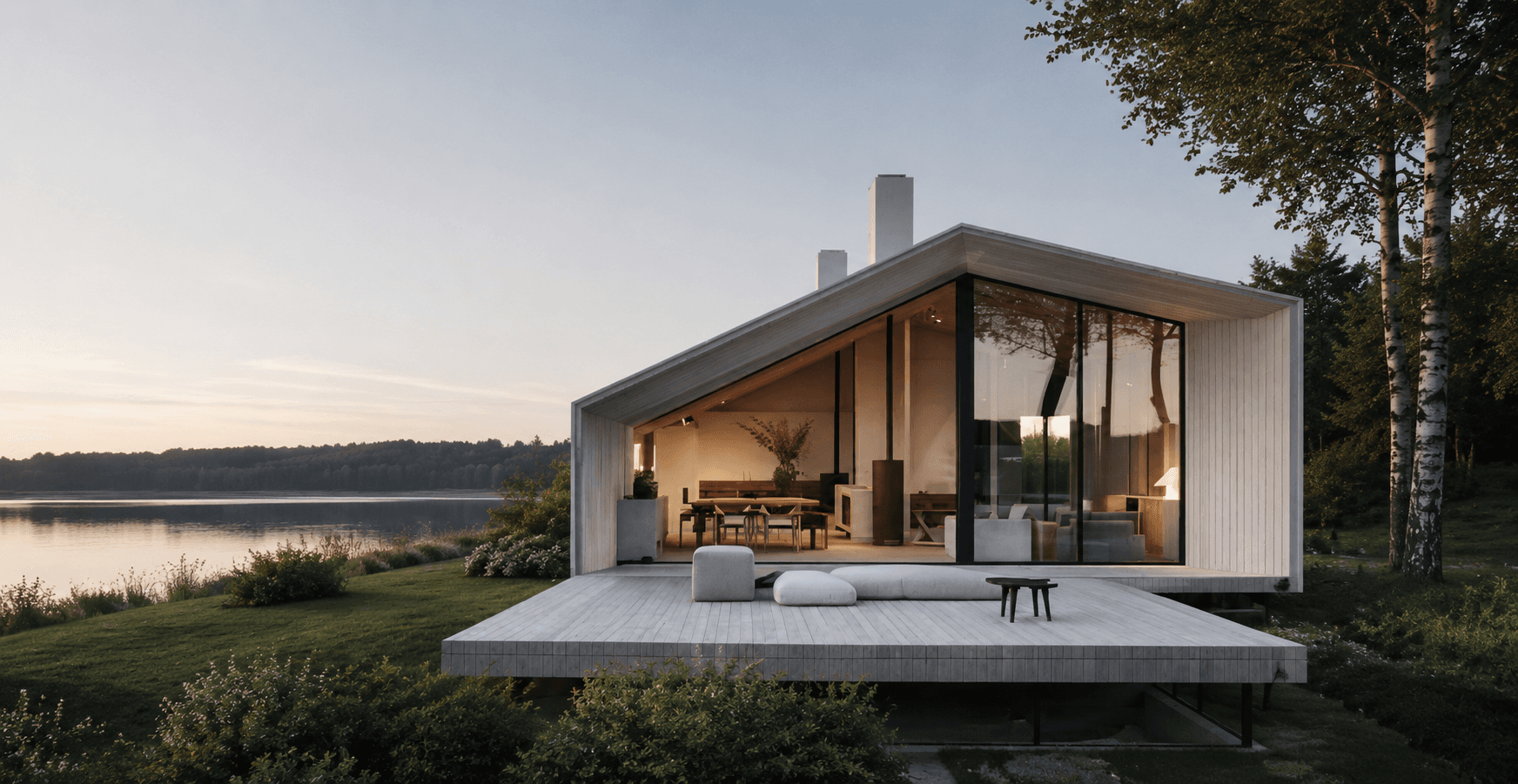
Myths & Facts About Modular Homes
5 Myths About Modular Homes People Still Believe
July 22, 2026 · 6 min read · TF Module
Modular homes in Russia are surrounded by myths that formed back in the era of site cabins and cheap temporary shacks. The market has changed since then, but the perceptions haven't. Let's break down the five most persistent misconceptions and see what's actually behind them.
Myth 1: "A modular home is a temporary shack"
A modular home is assembled from finished factory blocks, but engineering-wise it's a full home for year-round living. The calculated structural service life is 50–100 years. The difference from classic construction is in the production method: the load-bearing joints, insulation, and building systems are built into the design at the factory, not assembled on-site in field conditions.
Myth 2: "It's cold inside in winter"
Winter comfort isn't determined by the type of home, but by the thermal calculation. The problem with part of the market is that thermal engineering is calculated only on paper. TF Module runs a climate calculation for the specific region — the homes are designed for operation from −50 °C to +45 °C. Getting the thickness and composition of the building envelope right matters more than the wall material itself.
Myth 3: "Chinese-made means low quality"
The market has changed. Modern Chinese factories produce modules to international standards, and the real question isn't the country but quality control and the correctness of the engineering. TF Module works directly with factories, selects production for the specific project, and controls quality at every stage, including inspecting the finished home before shipment.
Myth 4: "All modular homes are the same"
There's no standard catalog everyone picks the same home from. Every project starts from the client's brief: location, climate, purpose — housing, glamping, a hotel, a community. Only after that are engineering decisions made and production selected. The architecture and floor plans adapt to the brief.
Myth 5: "Modular automatically means cheap and rough"
Modular technology delivers speed and predictability, but that doesn't mean low quality. This is a premium product: factory precision, Smart Home and turnkey furniture, engineering matched to climate. The savings here don't come from cheaper materials, but from shorter timelines and cutting out markups through direct factory work.
Bottom line
Most myths about modular homes are a holdover from the old market. A modern modular home is an engineered product with a service life measured in decades, designed for a specific climate and brief.